
Calcific Tendonitis: How to Dissolve Shoulder Calcium Without Surgery in East Auckland
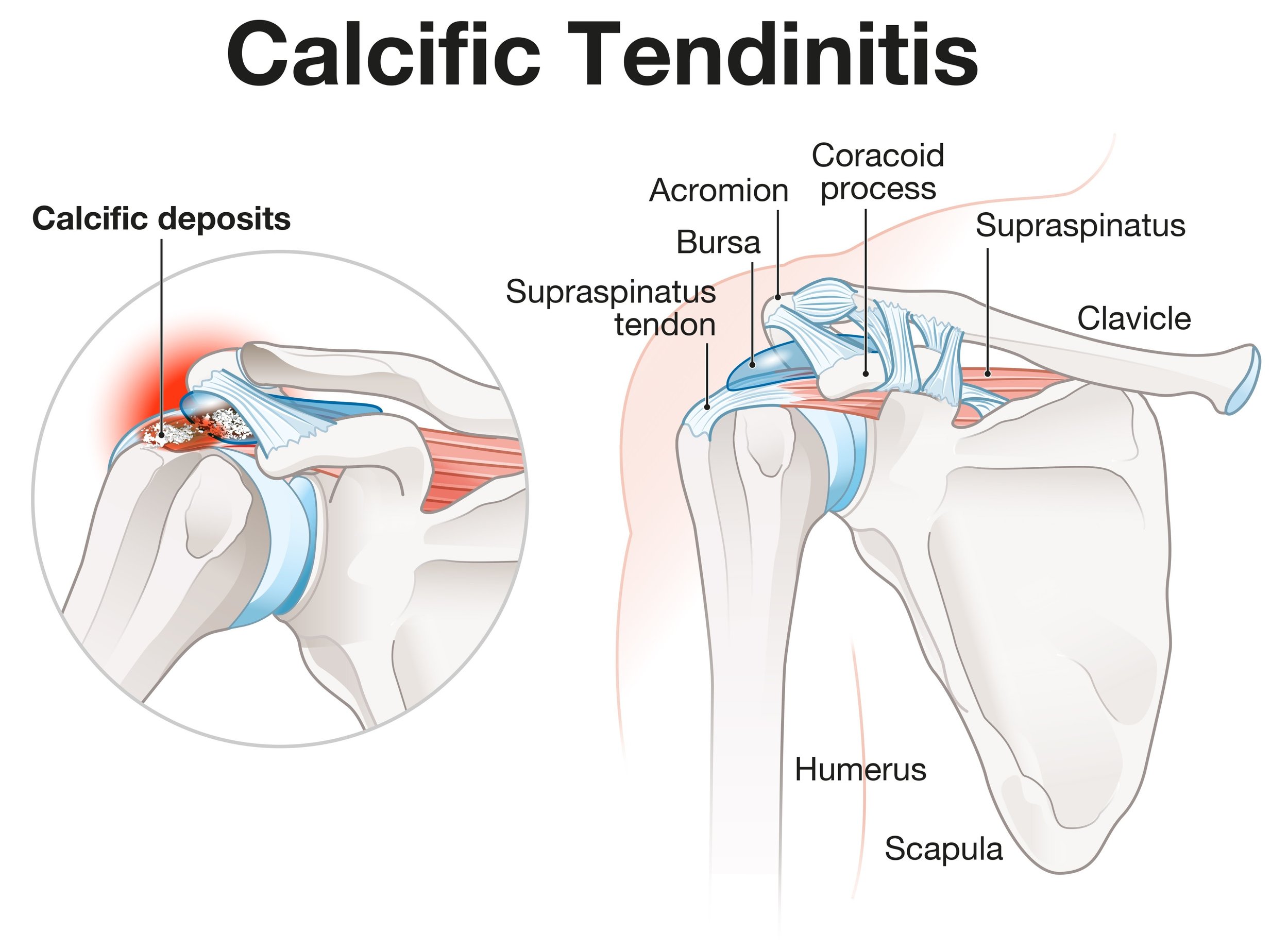
There is a specific type of shoulder pain that is unlike any other. It isn't just a dull ache; it is a sharp, catching pain that can bring you to your knees when you lift your arm to put away groceries or hang out the washing. At night, it throbs relentlessly, making sleep impossible.
You go for an ultrasound or X-ray, and the doctor tells you: "You have calcium in your shoulder."
The medical term is Calcific Tendonitis of the Rotator Cuff. For years, the standard advice given to patients in Howick was grim: live with the pain, get endless cortisone injections, or undergo surgery to scrape the calcium out.
But technology has changed. At Velca Health Centre, we are using Shockwave Therapy to offer a non-invasive alternative that essentially "melts" the calcium away, allowing the body to reabsorb it naturally.
Here is everything you need to know about this painful condition and how we treat it.
Part 1: What is Calcific Tendonitis?
Calcific tendonitis is a condition where calcium deposits form within the tendons of your rotator cuff (most commonly the supraspinatus tendon).
Think of your tendon like a rope. In a healthy shoulder, this rope is smooth and flexible. In calcific tendonitis, a hard, chalky deposit forms inside the fibers of the rope. This deposit acts like a pebble in your shoe—every time you lift your arm, that "pebble" gets pinched between your arm bone and your shoulder blade (the acromion).
The "Toothpaste" Analogy
The consistency of the calcium changes over time.
Formative Phase: The calcium is forming. It is often chalky and hard. Surprisingly, this phase isn't always painful.
Resting Phase: The deposit is stable and hard. It causes mechanical impingement (pain when lifting the arm).
Resorptive Phase: The body tries to break it down. The calcium turns into a liquid, toothpaste-like consistency. This is usually the most painful phase because the deposit swells, creating immense pressure inside the tendon.
Why Did I Get This?
We see this frequently in East Auckland locals aged 40–60. It is rarely caused by trauma (like a fall). Instead, it is often metabolic or related to cellular aging. It is significantly more common in women and those with thyroid issues or diabetes, though often it appears for no obvious reason.
Part 2: Surgery vs. Shockwave
Traditionally, if the calcium didn't go away, an orthopaedic surgeon would perform arthroscopic surgery to cut into the tendon and scoop the calcium out. While effective, surgery requires anaesthetic, weeks in a sling, and months of rehab.
Enter Shockwave Therapy (The Game Changer)
Radial Shockwave Therapy (RSWT) has revolutionized how we treat this. It is currently the only non-surgical method with strong clinical evidence for removing calcium deposits.
How Shockwave Removes the Calcium
We use our high-energy Shockwave applicator directly over the calcium deposit. The physics is fascinating:
Mechanical Fragmentation: The acoustic waves hit the hard calcium deposit. The energy creates shear forces that physically break the hard calcium "pebble" into tiny, sand-like particles.
Cavitation: The waves create bubbles in the tissue that collapse, helping to loosen the deposit's grip on the healthy tendon.
Reabsorption: Once the calcium is broken down into dust/sand, your body’s lymphatic system can flush it away naturally.
Healing: The Shockwave stimulates new blood vessel growth to repair the hole in the tendon left by the calcium.
Part 3: The Velca Treatment Protocol
Treating Calcific Tendonitis is different from treating a normal muscle strain. It requires precision.
1. Diagnostic Confirmation We rely on your imaging (Ultrasound or X-ray). If you have your reports from East Care or Mercy Radiology, please bring them in. We need to know exactly where the deposit is to target it.
2. The "Search and Destroy" Method During the session, we use the Shockwave machine to locate the deposit. When we hit the calcium, you will feel it—it reproduces your specific sharp pain. This is good! It means we are on target.
We administer roughly 2,000 to 3,000 shocks per session.
The treatment takes about 5–10 minutes.
3. Pain Management Because we are physically breaking down a deposit, the area can be sore for 24 hours. This is a sign the chemical process has started.
4. Rotator Cuff Rehab (Physio) Once the calcium starts to dissolve, we must strengthen the tendon. A tendon with a hole in it (where the calcium used to be) is weak. Our Physiotherapists will guide you through rotator cuff isolations to ensure you regain full power.
Part 4: Real Results
Can it disappear completely? Yes. We have seen follow-up X-rays where large 1cm calcium deposits have vanished completely after a course of Shockwave.
How many sessions? Calcific tendonitis is stubborn. We typically recommend a minimum of 3 sessions. Some larger deposits may require a second block of treatment.
Don't Rush to Surgery If you have been scheduled for surgery or are on a waiting list, it is worth trying a course of Shockwave first. It is non-invasive, cheaper, and has no downtime.
