
What to Expect from Your First Physio Appointment in Howick
Booking your first physiotherapy appointment can feel like a big step — especially if you are not sure what is going to happen when you get there, or whether it is going to be worth it. This article walks you through exactly what to expect when you come to Velca in Howick for the first time.
There are no surprises here. Just a clear picture of how your first appointment is likely to go, so you can walk through the door with confidence.
Before You Arrive
What to bring
Any relevant imaging you have (X-rays, MRI, ultrasound reports)
A list of any medications you are currently taking, if relevant to your condition
Comfortable clothing that allows access to the area being assessed — for example, shorts for a knee assessment, a singlet for a shoulder assessment
Your ACC45 claim number, if you have already lodged a claim (or we can lodge it with you on the day)
Do I need a referral?
No. You can book directly with us at Velca without a GP referral. If your GP has provided a referral letter with background information, please bring it — it is helpful but not required.
Part 1: The Subjective Assessment (“The Chat”)
Your physiotherapist will begin by sitting down with you to talk. This part of the appointment is called the subjective assessment, and it is one of the most important parts of the whole process.
You will be asked about:
What brought you in today — the nature and location of your pain or problem
When it started and how it came on (sudden injury, gradual onset, or no obvious cause)
What makes it better and what makes it worse
How it is affecting your daily life — work, sleep, sport, or household tasks
Your relevant medical history and any previous episodes of the same problem
What you are hoping to get out of physiotherapy
This is your time to explain what has been going on in as much detail as you like. The more clearly you can describe your experience, the better placed your physiotherapist will be to understand what is happening and to plan an appropriate assessment.
Part 2: The Physical Assessment
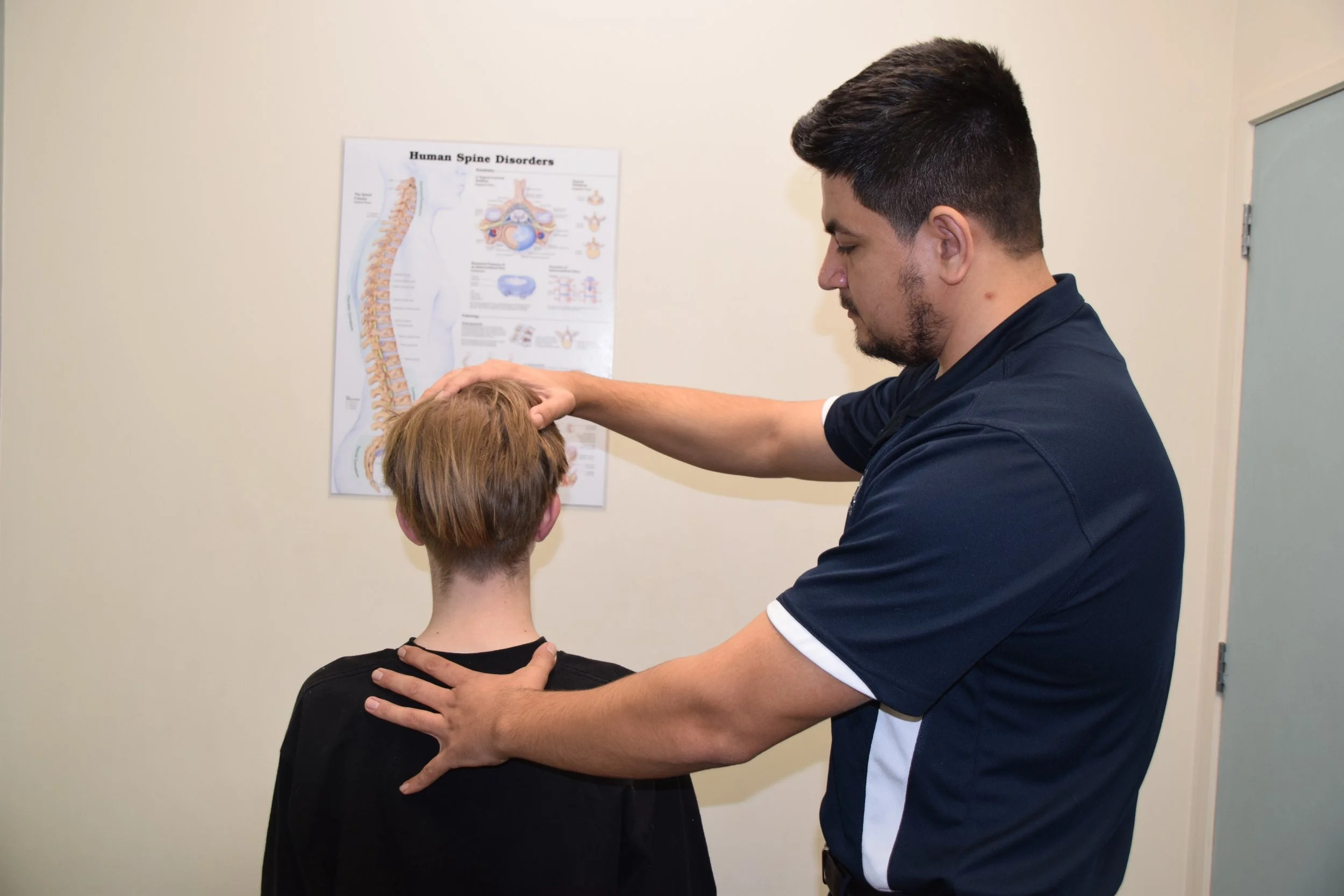
Once your physiotherapist has a clear picture of your history, they will move on to the physical assessment. Depending on your presentation, this may include:
Observation of your posture and movement patterns
Range of motion testing — how far a joint can move, and whether that movement causes pain
Strength testing of the relevant muscles
Neurological screening if there are any symptoms of nerve involvement (such as pins and needles or numbness)
Specific orthopaedic tests relevant to the area being assessed
Palpation — hands-on assessment of the muscles, tendons, and joints
Your physiotherapist will explain what they are doing as they go, and will check in with you about pain levels throughout. You are always in control of what happens during an assessment — if anything is uncomfortable, please say so.
Part 3: The Clinical Impression and Plan
At the end of the assessment, your physiotherapist will share their clinical impression with you — a working understanding of what may be contributing to your symptoms and what physiotherapy may be able to offer.
This is also the time to ask questions. Some useful ones:
What do you think is going on?
How long might this take to improve?
What can I do at home to support my recovery?
Are there things I should avoid in the meantime?
Your physiotherapist will also discuss a plan for ongoing appointments if they are needed. This might be a course of sessions over several weeks, or it might be a single assessment followed by a home exercise programme you can work through independently.
Part 4: Will There Be Hands-On Treatment at the First Appointment?
Often yes, though this depends on the complexity of your presentation. In many cases, the first appointment includes both a thorough assessment and some initial hands-on physiotherapy, such as manual therapy, soft tissue work, or joint mobilization.
In some cases — particularly where a complex or multifaceted presentation needs more careful consideration — the first appointment may focus primarily on assessment, with physiotherapy beginning at the second visit. Your physiotherapist will discuss this with you.
Part 5: What Happens After Your First Appointment?
You will typically leave with:
A clear explanation of what the assessment has found
Any relevant home exercises or activity guidance
A plan for follow-up appointments, if needed
Clarity on costs, ACC status, and what to expect at your next visit
At Velca, appointments are longer than the industry standard. We do not rush. We believe that time spent understanding your situation thoroughly at the start leads to better outcomes, fewer appointments overall, and a plan that actually fits your life.
Finding Us
Velca is located at 3/10 Wellington St, Howick, Auckland 2014, in The Terraces complex. We have parking available on site. You can find full directions and a map at velca.co.nz/find-us.
We are open Monday to Saturday. For current hours, visit our website or give us a call on 022 639 2705.
This article is for general information purposes only. It is not a substitute for advice from a registered health practitioner. If you have concerns about your health, please consult a qualified professional.
Velca Health Centre | 3/10 Wellington St, Howick, Auckland 2014 | velca.co.nz | 022 639 2705
