
Sciatica & Disc Herniation (The Combined Approach)
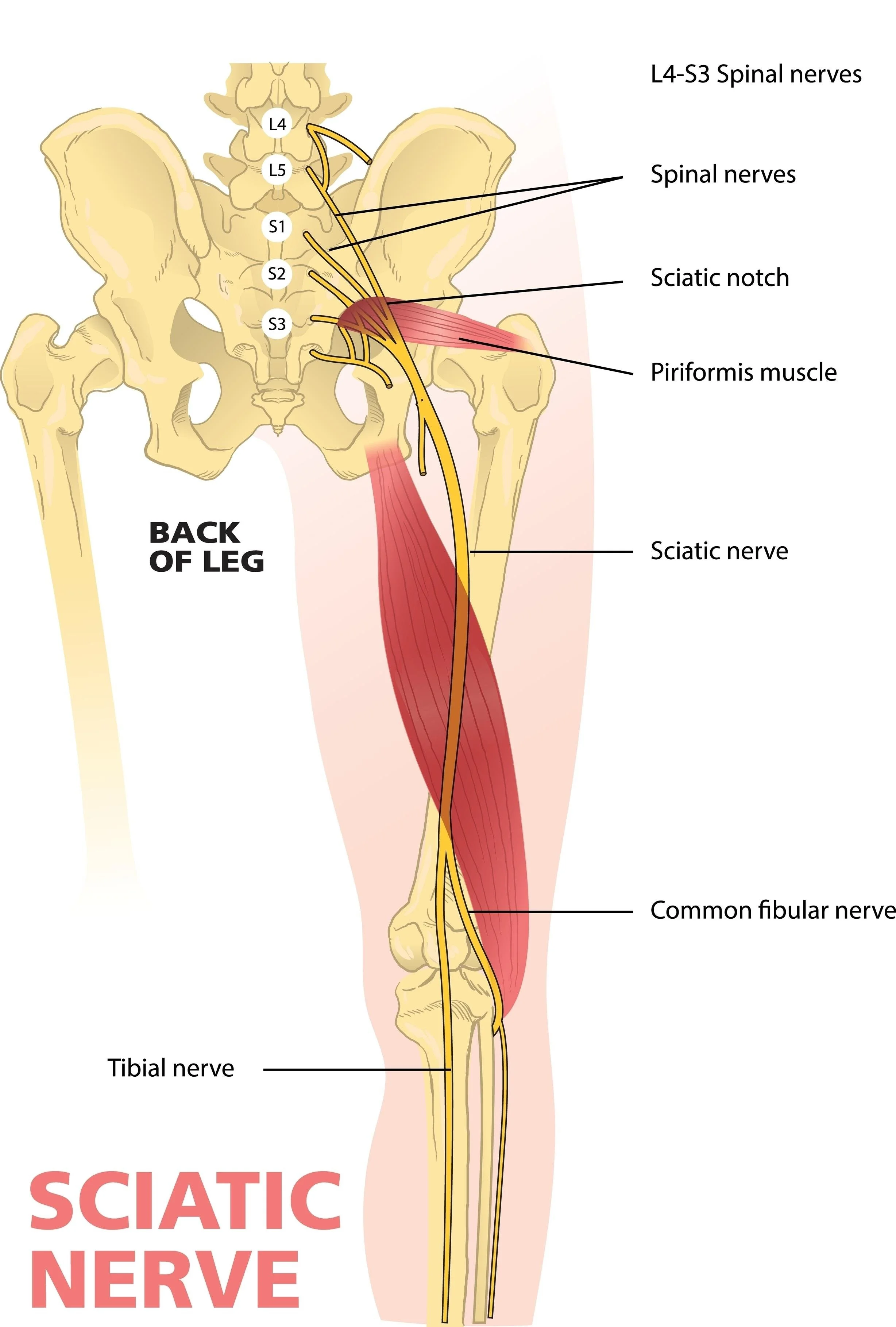
Sciatic Nerve
There is back pain, and then there is Sciatica.
Back pain aches. Sciatica burns. It feels like an electric shock shooting from your lower back, through your buttock, down the back of your leg, and sometimes all the way to your big toe.
It can be terrifying. You might be stuck on the floor, unable to put your socks on, wondering if you’ve done permanent damage.
At Velca Health Centre, Sciatica is one of the most common conditions we treat. However, we treat it differently than most. We don't just "crack your back" and send you home, nor do we just give you stretches. We believe Sciatica requires a Dual-Approach: Mechanical alignment (Chiropractic) plus Neural Mobility (Physiotherapy).
Here is why this combination works best for East Aucklanders dealing with nerve pain.
Part 1: The "Double Crush" - What is Sciatica Really?
The Sciatic nerve is the longest and thickest nerve in your body. It starts in your lower back (L4-S1 vertebrae) and runs all the way to your feet.
"Sciatica" isn't actually a diagnosis; it's a symptom. It means something is crushing or irritating that nerve.
The Disc Herniation (The Slipped Disc): The gel-like cushion between your vertebrae bulges out and pushes directly on the nerve root.
Piriformis Syndrome: The nerve gets squeezed by a tight muscle deep in your buttock.
Stenosis: The bony tunnel the nerve travels through narrows due to arthritis.
The Inflammation Factor It’s not just mechanical pressure. When a disc bulges, it leaks chemicals that cause massive inflammation. The nerve becomes chemically irritated, making it hypersensitive. This is why even a small movement can send you through the roof.
Part 2: Phase 1 - The Chiropractic Role (Take the Pressure Off)
When you are in acute pain (the "I can't stand up straight" phase), forcing you to exercise is often impossible. You need to offload the nerve first.
Restoring Motion Our Chiropractors focus on the mechanics of the lumbar spine and pelvis. If your L5 vertebra or Sacroiliac Joint (SIJ) is locked or twisted, it creates constant tension on the nerve root.
Adjustments: Gentle, specific adjustments mobilize the stuck joints. This can open up the "intervertebral foramen" (the hole the nerve exits), relieving pressure.
Decompression: We may use techniques to gently stretch the spine, creating a vacuum effect that helps pull the bulging disc material back away from the nerve.
Some patients feel immediate relief from the "electric" sensation after their first few adjustments.
Part 3: Phase 2 - The Physio Role (Glide the Nerve)
Once the mechanical pressure is reduced, the nerve is still sensitive. If you don't rehab it, the pain will return the next time you sneeze or bend over.
Nerve Flossing (Neural Glides) Nerves are not like muscles; they don't like to be stretched. If you do a standard hamstring stretch with Sciatica, you might make it worse!
Our Physios teach you "Nerve Flossing." These are specific movements that pull the nerve one way, then the other, helping it glide smoothly through the tissues without getting stuck.
Core & Glute Strength Your lower back relies on your core for stability. If your deep core (Transversus Abdominis) is weak, your spine collapses, and the disc bulges again. We build a safe, progressive program to create a "muscular corset" around your spine.
Part 4: Why Velca is Different
In many clinics, you have to choose: "Do I see the Chiro OR the Physio?"
At Velca, we are under one roof. We talk to each other.
Your Chiro handles the initial pain relief and movement restoration.
Your Physio handles the soft tissue and core strength.
The Result: Faster recovery and a lower chance of recurrence.
Red Flags: When to go to the Hospital Most Sciatica can be treated in the clinic. However, if you experience loss of bowel/bladder control or "Saddle Anaesthesia" (numbness in your groin), go to Middlemore Hospital immediately. For everything else, we are here to help.
Don't Wait for it to "Go Away" Nerves heal slowly. The longer the nerve is compressed, the longer the recovery takes. Book an assessment today and see if a combined approach is correct for you.
