
The Ultimate Guide to Shockwave Therapy
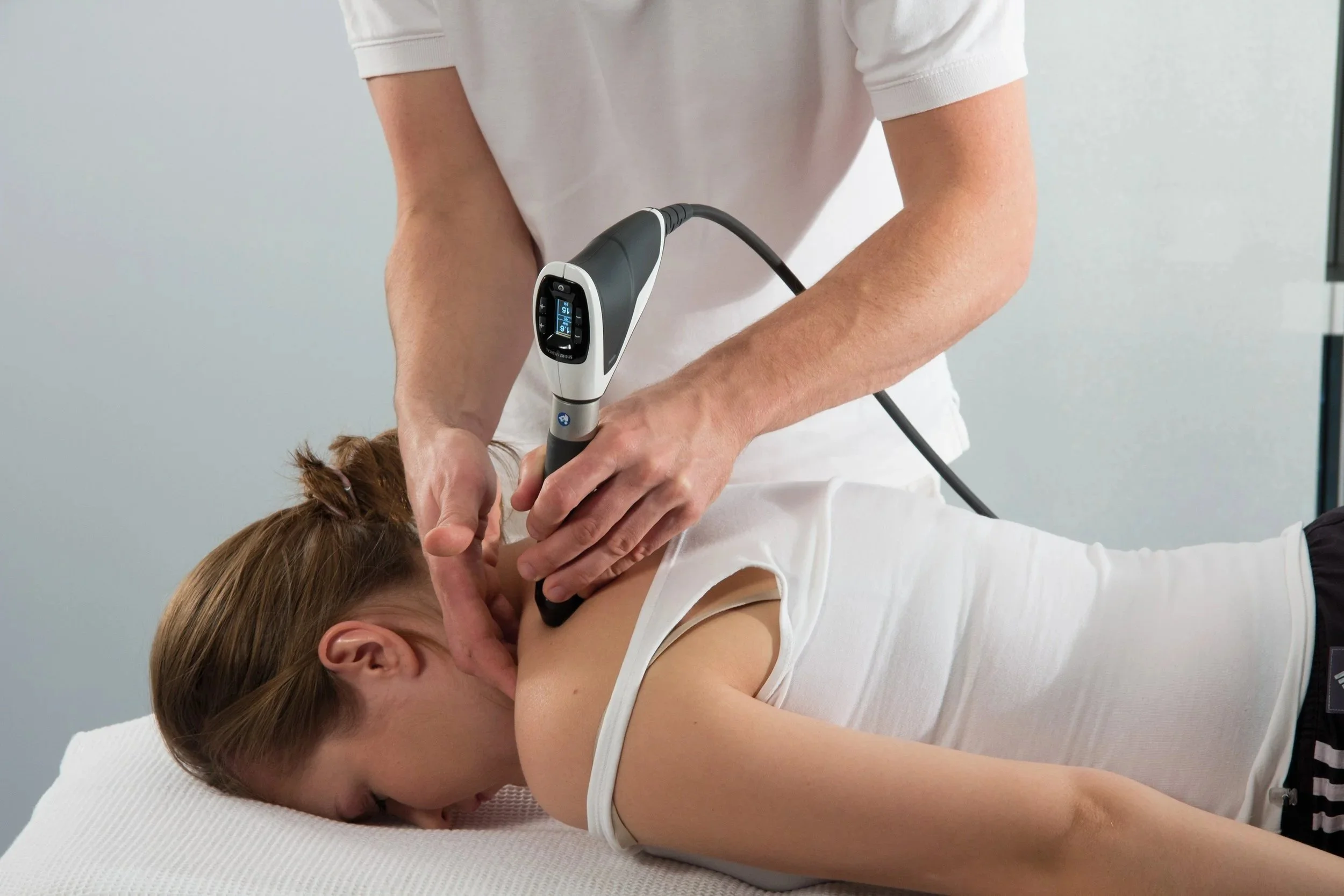
Shoulder shockwave
If you have been suffering from a nagging injury for months—or even years—you know the frustration of the "wait and see" approach. You’ve rested. You’ve iced. You’ve taken the anti-inflammatories and you’ve done the exercises. You may have even had a cortisone injection. Yet, the pain remains.
For many patients in East Auckland, this is the point where they start to fear that surgery is the only option left.
But there is another option. One that doesn't involve scalpels, needles, or long recovery times.
At Velca Health Centre, we utilise Radial Shockwave Therapy (RSWT), a gold-standard technology that is changing the way we treat chronic tendon injuries. Whether you are a runner dealing with persistent heel pain on the Rotary Walkway, or an office worker with a frozen stiff shoulder, Shockwave might be the breakthrough your body has been waiting for.
In this ultimate guide, we are going to break down exactly what Shockwave is, the science behind how it heals "unhealable" tissue, and whether it is the right solution for you.
Part 1: What Actually Is Shockwave Therapy?
First, let’s clear up a common misconception. When we say "Shockwave," we are not talking about electrical shocks. You won't be electrocuted!
Extracorporeal Shockwave Therapy (ESWT) is a technology that uses acoustic sound waves—similar to the technology used to break up kidney stones, but adapted for musculoskeletal injuries.
How the Machine Works The device consists of a base unit and a handheld applicator. Inside the applicator, a projectile is fired back and forth at high speed using compressed air. When this projectile hits the transmitter at the end of the applicator, it generates a high-energy acoustic pressure wave.
When our therapist places the applicator against your skin (using a contact gel), these sound waves travel through your skin and deep into the injured tissue—be it a tendon, a muscle, or a ligament.
The "Micro-Trauma" Effect
It sounds counter-intuitive, but to heal an old injury, we sometimes have to "restart" the injury process.
Chronic injuries (like Achilles tendonitis that has lasted 6 months) often stop healing because the body has simply given up. The brain decides that the area is just "scar tissue" now and stops sending repair cells to the site. The injury enters a state of dormancy.
Shockwave therapy creates controlled micro-trauma in the tissue. These intense sound waves cause microscopic disruption to the scar tissue and calcification. This disruption triggers a massive biological response:
New Blood Vessel Formation (Neovascularization): The body rushes blood and oxygen to the area.
Collagen Production: It stimulates the production of pro-collagen, the building blocks needed to repair tendons.
Pain Relief (Analgesia): It overstimulates the nerve endings, reducing pain sensitivity (Substance P reduction).
In simple terms: It wakes your body up and forces it to restart the healing process.
Part 2: What Conditions Can We Treat?
Shockwave is not a "cure-all" for everything. It is highly specific. It works best on insertional tendinopathies (where tendons attach to bone) and chronic soft tissue issues.
At Velca, we see the highest success rates with the following 5 conditions:
1. Plantar Fasciitis (Heel Pain)
This is the #1 reason patients seek out Shockwave. If you have that stabbing pain in your heel when you first step out of bed, and it hasn't gone away after 3 months of stretching, Shockwave is the NICE-guideline recommended treatment.
Success Rate: Studies show up to 80% improvement for persistent cases.
Why it works: It breaks down the thickened plantar fascia tissue and stimulates blood flow in the heel, which typically has poor circulation.
2. Achilles Tendinopathy
Common in Howick’s running community. Whether it’s mid-portion (pain in the middle of the tendon) or insertional (pain at the heel bone), the Achilles is thick and stubborn. Shockwave penetrates deep enough to reach the core of the tendon.
3. Calcific Tendonitis of the Shoulder
This is a condition where calcium deposits form within the rotator cuff tendons. It is excruciatingly painful and often leads to "Frozen Shoulder."
The Shockwave Effect: The acoustic waves physically smash the calcium deposits into a toothpaste-like consistency, which the body can then reabsorb naturally. It is the closest thing to "non-surgical surgery" available.
4. Tennis & Golfers Elbow
Lateral Epicondylitis (Tennis Elbow) can plague tradespeople and office workers for years. Because tendons in the elbow receive very little blood flow, they heal slowly. Shockwave essentially "jump-starts" that blood supply.
5. Greater Trochanteric Pain Syndrome (Hip Pain)
Pain on the outside of the hip, making it impossible to sleep on your side. This is often caused by gluteal tendinopathy. Shockwave is highly effective at reducing the pain signals and stimulating glute tendon repair.
[Image Block: Infographic showing a human body map with dots on the Heel, Achilles, Knee, Hip, Elbow, and Shoulder, labeled "Areas We Treat".]
Part 3: The Velca Treatment Experience
We understand that trying a new medical treatment can be intimidating. Here is a step-by-step walkthrough of what happens when you book a Shockwave session at our Howick clinic.
Step 1: The Assessment
Before the machine is even turned on, we must confirm your diagnosis. Shockwave is powerful, but it must be used on the right injury.
If you are not referred from a specialist then our Physios or Chiropractors will perform a full orthopedic exam.
We check for contraindications (e.g., pregnancy, blood thinning medication, cortisone injection in the last 6 weeks).
If you are a candidate, we can usually start treatment immediately.
Step 2: The Setup
You will lie comfortably on the treatment table. We apply an ultrasound gel to the target area. This gel is crucial—it ensures the sound waves travel from the applicator into your body without being lost in the air.
Step 3: The Treatment (The "Thump")
The therapist will place the applicator on the injury and start the machine. You will hear a loud, rhythmic "thumping" or "clacking" sound.
Does it hurt? We won't lie—it can be uncomfortable. Most patients describe it as a "4 or 5 out of 10" pain. However, the treatment only lasts 3 to 5 minutes per spot and the pain starts to settle after 1 minute.
The "Feedback" Loop: We communicate with you constantly. We want to find the spot that replicates your pain (the "sweet spot"). If you feel the pain, we know we are treating the right tissue. As the session progresses, the area often goes numb, and the pain decreases.
Step 4: Aftercare
Immediately after treatment, you might feel a strange sensation—many patients report an immediate reduction in pain (the analgesic effect).
Activity: You can walk and drive immediately. We recommend avoiding high-impact exercise (like a long run or heavy gym session) for 48 hours to let the tissue recover.
No Ice: This is important! Because we want to stimulate inflammation (the healing kind), we advise against taking anti-inflammatories (like Nurofen) or icing the area for 24 hours, unless you have been instructed to do so by your GP or specialist. Let the body do its work.
Part 4: Frequently Asked Questions (FAQ)
How many sessions will I need? Shockwave is a cumulative treatment. Most research protocols recommend a course of 3 to 5 sessions, spaced 5 to 7 days apart.
Session 1: "Testing the waters."
Session 2-3: Significant pain reduction often occurs here.
Session 4-5: Consolidating the healing and tissue remodeling.
Is it covered by ACC? Currently, ACC covers part of the cost for the consultation (Physiotherapy or Chiropractic) if you have an accident claim, but there is often a surcharge for the use of the Shockwave machine itself due to the cost of the technology. We can discuss the exact pricing structure with you at the front desk—it is significantly cheaper than the cost of private surgery!
Why choose Velca for Shockwave? At Velca, we don't just use Shockwave in isolation. We are a multidisciplinary clinic.
Combined Approach: Should you want to then we can combine Shockwave with Chiropractic care (to get you moving better) and Physiotherapy rehab exercises (to strengthen the tendon as it heals).
Experience: Our team is trained in the specific protocols for frequency (Hz) and pressure (Bar) to ensure you get a therapeutic dose, not just a massage.
Part 5: Is Shockwave Right for You?
If you are reading this, you are probably tired of being in pain. You might be doubting whether your injury will ever go away.
Ask yourself these three questions:
Has your pain lasted longer than 3 months?
Have you tried rest, ice, and stretching with little success?
Is the pain affecting your daily quality of life (walking, sleeping, working)?
If you answered "Yes," you are likely a perfect candidate for Shockwave Therapy.
You don't have to live with chronic tendon pain. The technology to fix it is right here in East Auckland.
